Something is off. You just can’t name it yet.
Maybe she’s tired all the time. Maybe she’s quieter, or sharper, or just somewhere else even when she’s sitting next to you.
It’s tempting to act right away: take the phone, set new rules, have the big talk. Most parents try that. Most parents watch it fail, not because they don’t care, but because they’re treating a feeling instead of a picture.
This guide gives you one week to see clearly. No confiscating, no lectures, no reading her messages. Just watching, kindly, and writing down what you notice.
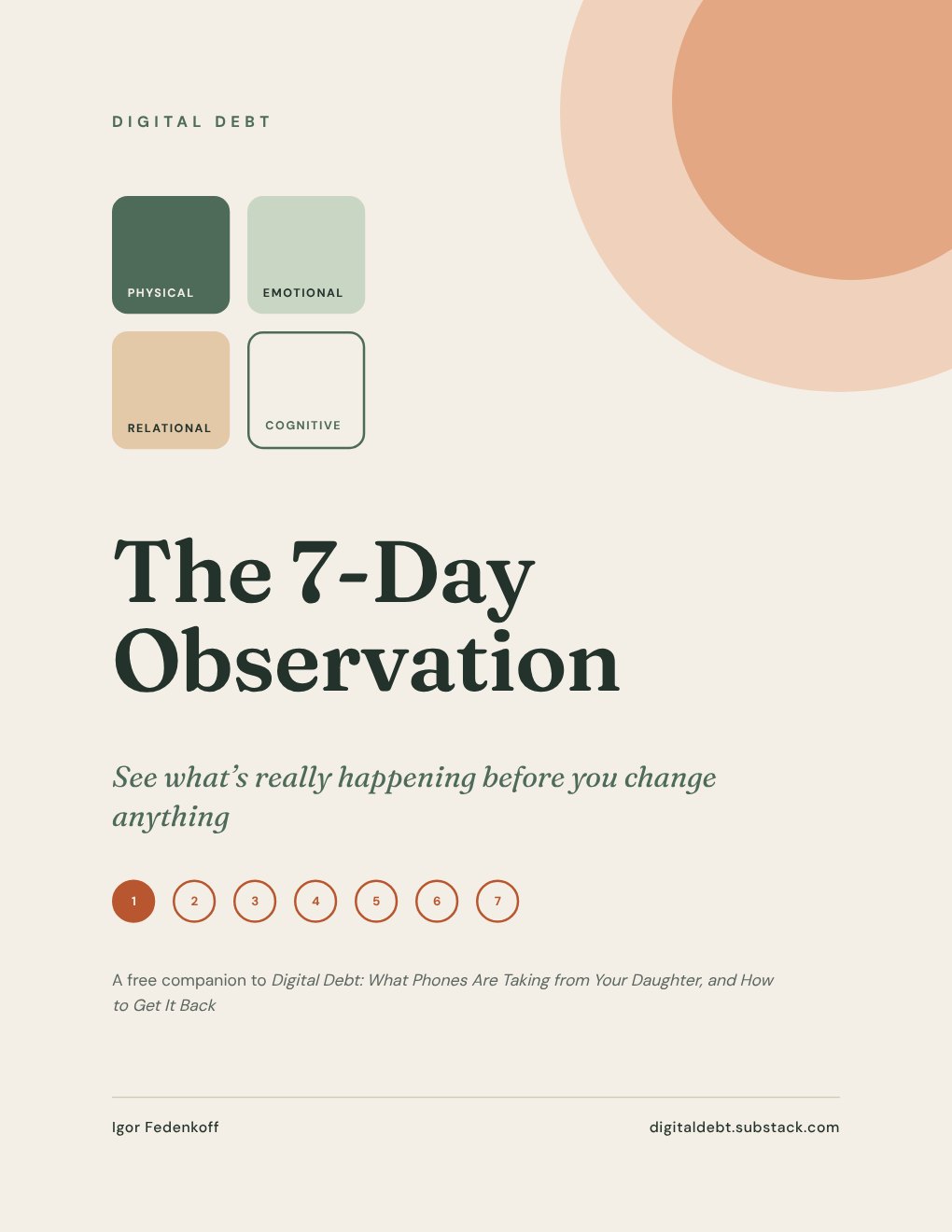
Phones don’t take one thing. They take from four places at once.
The guide walks you through each one: what to watch for, and one gentle question to ask her.
Physical
Her sleep, her energy, the headaches and stiff necks she mentions.
Emotional
Her mood after time on the phone, and how she talks about herself.
Relational
Real conversations with you, and friends she sees in person.
Cognitive
Whether she can stay with one thing, and what absorbs her.
Seven printable pages, built for pen and paper
- Why observe first, and five simple rules for the week
- The four debts: what to watch for, and one question to ask her for each
- Your honest guess before Day 1, so you can check it against what you actually see
- A 7-day tracker that records what’s going right, not a list of failures
- What you learned: her words, your own phone habits, and the pattern that emerges
Digital Debt
What Phones Are Taking from Your Daughter, and How to Get It Back
This guide is the first step from the book: a step-by-step plan, built around one mother and daughter’s journey, for paying down all four debts together, without turning your home into a battlefield.
Coming soon to Amazon